.png)
Types of braces
An overview of the appliances we use.
Below you will find an overview of all appliances we use.
Fixed braces
FixedFixed braces are bonded directly to the teeth and remain in place throughout the treatment. They work continuously and are suitable for virtually all types of irregularities.
 Brackets (fixed braces) The classic and most widely used orthodontic appliance. Suitable for almost all types of irregularities.
Metal or ceramic brackets are bonded directly onto the teeth. A thin wire runs through them and is gradually tightened to move the teeth into the correct position. Treatment duration is typically 18 to 24 months. Ceramic brackets are tooth-coloured and less visible than metal ones.
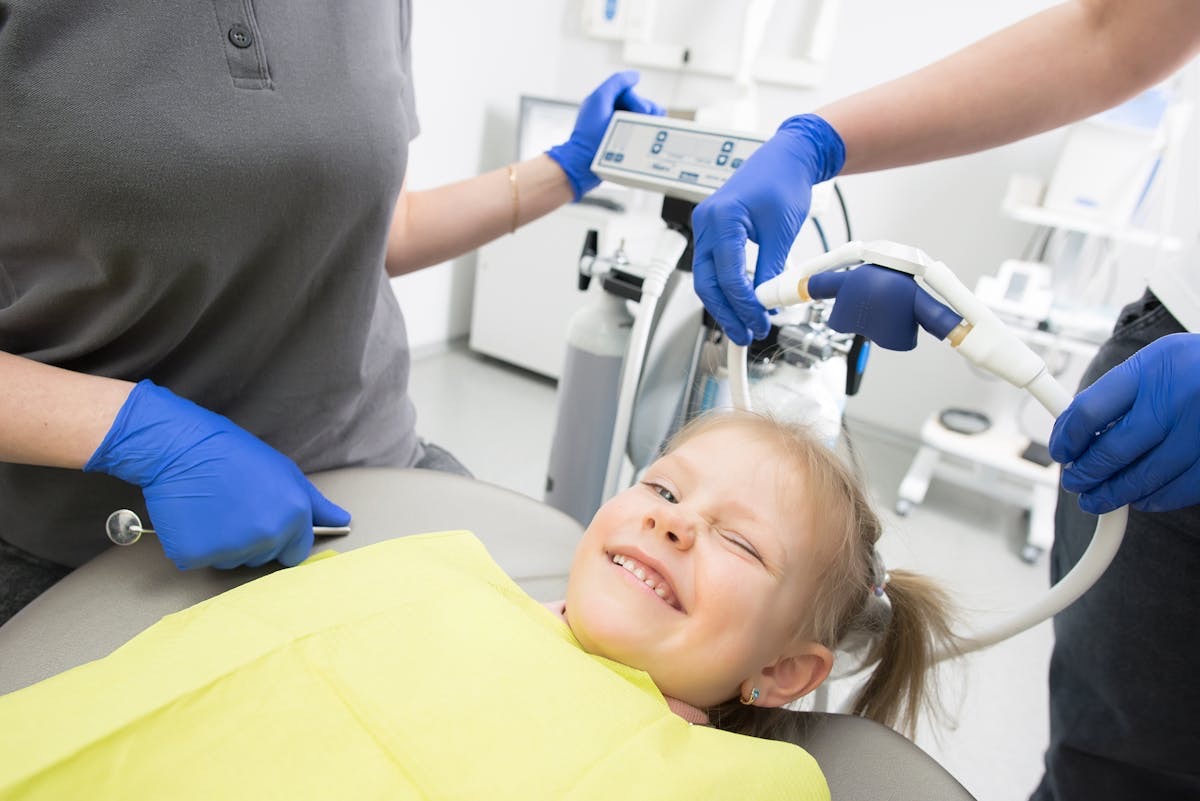 Palatal expander (Hyrax) Widens the upper jaw to create space for the permanent teeth.
A Hyrax is a fixed appliance that widens the upper jaw from the inside. It is used when the palate is too narrow — a condition that cannot be corrected with brackets alone. Treatment is most effective in children, when the palate bones have not yet fully fused. The appliance is activated a little each day by the parents.
 Herbst appliance Corrects an overbite by stimulating lower jaw growth.
The Herbst appliance is a fixed device that holds the lower jaw slightly forward at all times. This stimulates forward growth of the lower jaw. It is used for children with a pronounced overbite and is most effective during the growth phase, typically between ages 10 and 14. The appliance is often combined with brackets.
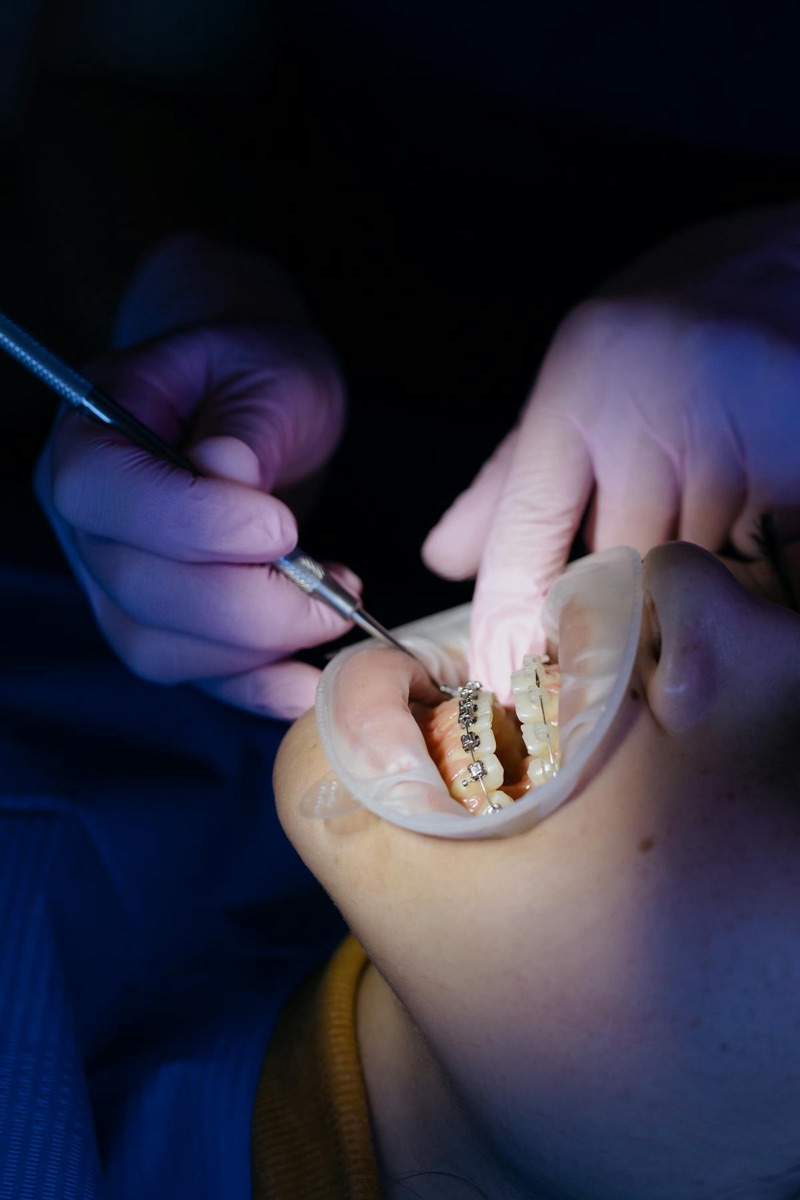 Intermaxillary correction springs Connects the upper and lower jaw to correct the bite relationship.
Correction springs are small coil springs attached between the upper and lower brackets. They apply a gentle, continuous force to bring the jaws into the correct relationship. They are used as an addition to fixed braces when the bite between the jaws needs correcting without the patient having to use elastic bands.
Removable braces
RemovableRemovable appliances can be taken out for eating, brushing or sports. They depend on cooperation and are used for specific indications.
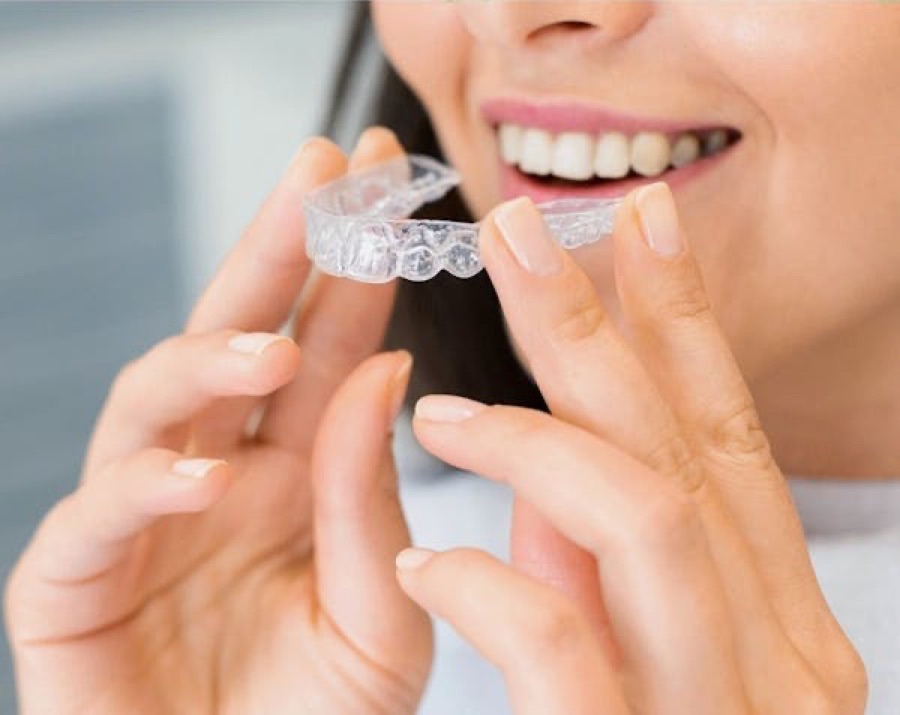 Invisalign aligners Virtually invisible, removable trays. Suitable for teens and adults.
Invisalign aligners are custom-made transparent plastic trays that gradually move the teeth. Each set is worn for about two weeks. The aligners are removable for eating and brushing. They are virtually invisible and particularly popular among adults and older teenagers. They require discipline: they must be worn for at least 22 hours per day.
 Removable plate A removable appliance for minor corrections or growth guidance.
A removable plate (or functional appliance) is used for minor corrections, space maintenance or growth guidance. It is taken out for eating, brushing and sports. Because it can be removed, cooperation is essential: the appliance only works when it is worn. It is mainly used in younger children.
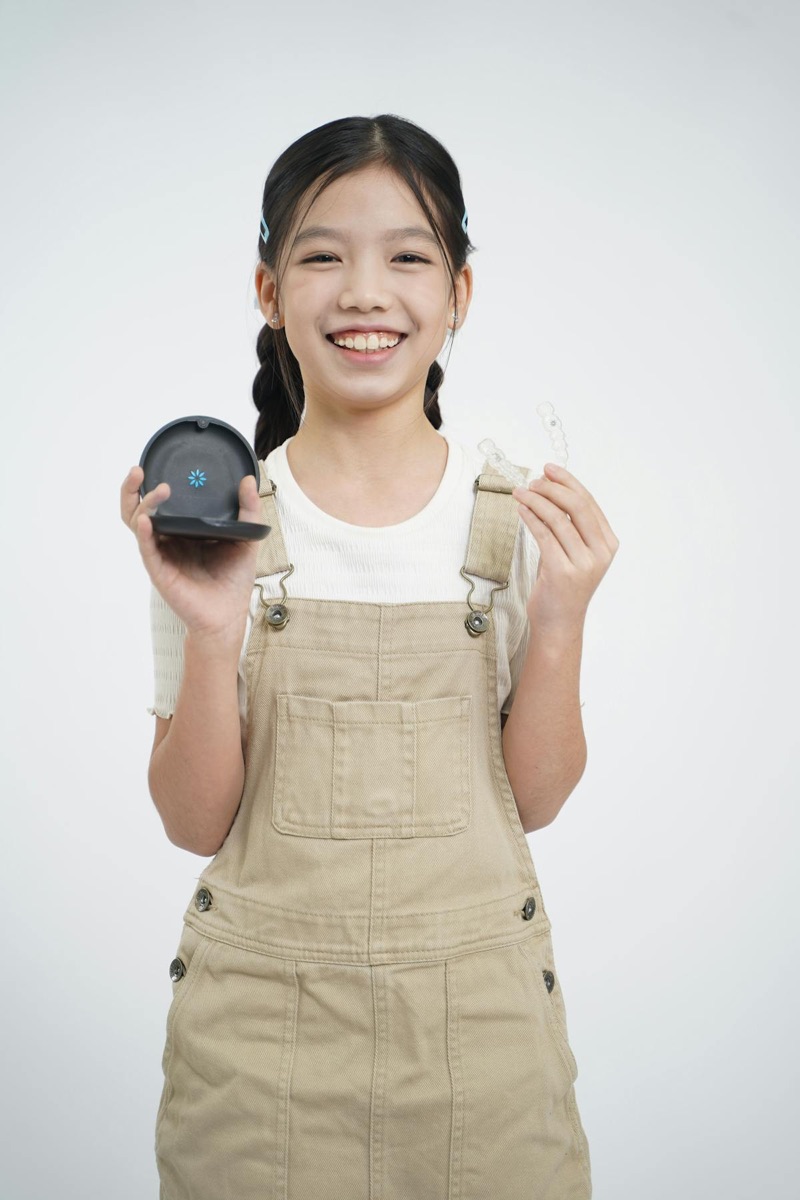 Activator A functional appliance that uses jaw muscle activity to correct the bite.
The activator is a removable functional appliance that is primarily worn at night. It uses the natural muscle activity of the jaws and lips to guide the growth of the jaws. It is used for children with an overbite or underbite and is most effective during the growth period. The activator is often a precursor to fixed braces.
 Headgear (extraoral appliance) External appliance worn at night to slow upper jaw growth or guide teeth.
Headgear is an external appliance that is attached to the upper teeth or a palatal expander and worn at night. It can slow or redirect the growth of the upper jaw. Although the appliance looks substantial, it is only worn at night and is usually well tolerated. It is used in specific situations where internal appliances alone are not sufficient.
Which suits your child?
The choice of appliance depends on the type and severity of the irregularity, the age and the cooperation of your child. We always advise based on the specific case — never on the basis of what is common or commercially attractive.